Why Your Lawn Looks Great in May and Terrible in July
The reason has less to do with summer and more to do with what happened earlier in the year.
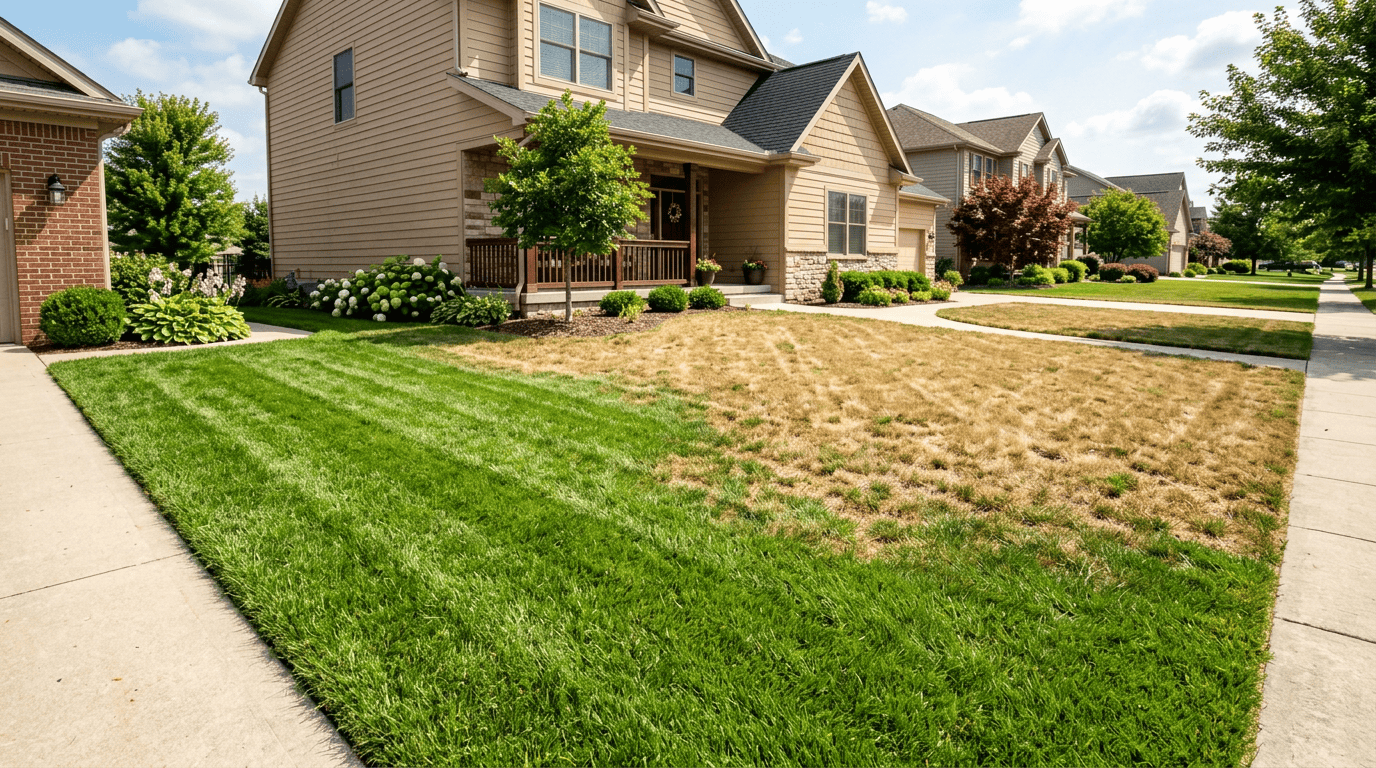
Every year, homeowners across Chicagoland experience the same frustration.
Their lawn looks incredible in May. The grass is thick, green, and healthy. Then July arrives, and suddenly the lawn begins turning brown, thinning out, and losing its appearance.
The reason has less to do with summer and more to do with what happened earlier in the year.
Spring naturally creates ideal growing conditions for cool-season grasses. Temperatures are mild, rainfall is more consistent, and the lawn can grow with relatively little stress.
Summer is different.
As temperatures rise, lawns face challenges including heat stress, drought conditions, increased foot traffic, and higher evaporation rates.
Lawns with shallow root systems struggle first. They cannot access moisture deep in the soil and begin showing signs of stress quickly.
Heat itself is not always the problem. Heat simply exposes weaknesses that already existed.
A lawn with strong roots, healthy soil, and proper seasonal care is much more likely to survive summer conditions.
The best time to prepare for summer is actually during spring and fall. Those seasons are when root development is strongest and when lawns can build resilience for future stress.
A lawn that thrives in July is usually the result of months of preparation.