Why Does My Grass Grow Faster Along the Sidewalk?
Many homeowners notice the same thing every spring and summer. The grass growing next to the sidewalk or driveway seems greener, thicker, and faster growing than the rest of the lawn.
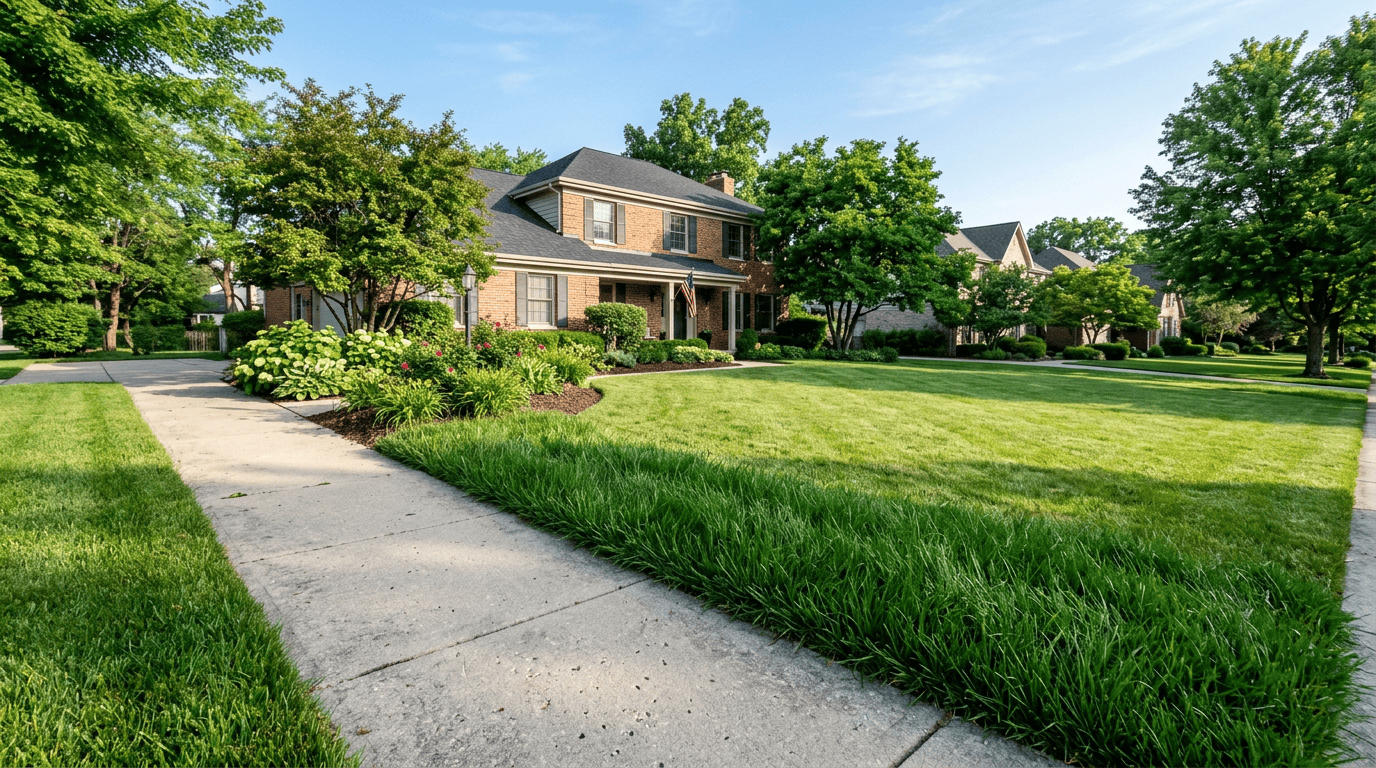
Many homeowners notice the same thing every spring and summer. The grass growing next to the sidewalk or driveway seems greener, thicker, and faster growing than the rest of the lawn.
While it might seem strange, there are several reasons this happens.
Concrete absorbs heat throughout the day and slowly releases it into the surrounding soil. During cooler months, this creates slightly warmer ground temperatures near sidewalks and driveways, helping grass wake up earlier and grow faster.
Water movement also plays a role. Rainwater often flows off hard surfaces and collects near the edges of sidewalks, providing additional moisture to nearby grass.
In some cases, the soil conditions near the sidewalk may actually be healthier than other parts of the yard. Areas with less compaction and better drainage can support stronger root systems.
The bigger takeaway is that uneven growth often reveals a larger lawn health issue. If one section consistently outperforms the rest of the lawn, it may indicate problems with soil quality, watering habits, or nutrient distribution elsewhere.
Instead of focusing on why the grass near the sidewalk looks good, homeowners should focus on helping the rest of the lawn perform at the same level.