Why Does Grass Grow in Clumps Instead of Evenly?
Clumping can happen for several reasons, and identifying the cause is important before trying to correct it.
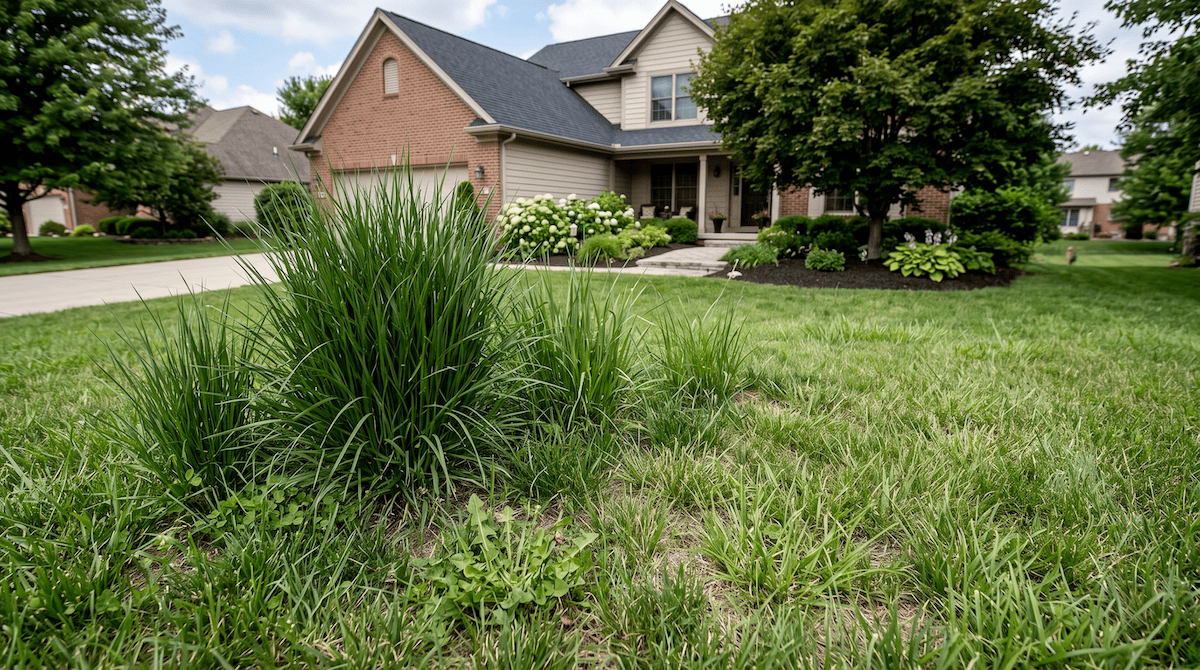
A healthy lawn should generally have a relatively uniform appearance.
So when grass begins growing in obvious clumps, homeowners naturally wonder what is causing the uneven growth.
Clumping can happen for several reasons, and identifying the cause is important before trying to correct it.
Uneven Seed Distribution
If a lawn was originally established from seed, inconsistent seed distribution can create areas with noticeably different density.
Some sections may have received more seed than others.
Over time, those differences can become more obvious.
Different Grass Species
Lawns aren't always made up of a single type of grass.
Different species or varieties can grow at different rates and respond differently to temperature, sunlight, and moisture.
This can create visible differences in texture and growth.
Uneven Soil Conditions
Soil can vary significantly across the same property.
One section may contain better topsoil while another contains construction fill or compacted material.
Different soil conditions affect how quickly roots develop and how efficiently plants access water and nutrients.
Fertilizer Distribution
Uneven fertilizer application can also produce inconsistent growth.
If one area receives substantially more nutrients than another, the difference may become visible through growth rate and color.
This is one reason professional applications require careful calibration and even distribution.
Mowing Can Make Clumping More Noticeable
Grass that grows at different rates can look particularly uneven after mowing.
Some sections may stand upright while others lay down or develop a different texture.
Keeping mowing equipment maintained and using an appropriate mowing height can improve appearance, but the underlying cause still needs to be considered.
Look Beyond the Grass Blade
When a lawn looks uneven, the visible grass is only part of the story.
The soil, roots, moisture, sunlight, and maintenance history all influence growth.
Instead of repeatedly treating the symptoms, homeowners should determine why the growth patterns are different.