The Truth About Winterizer Treatments and Why Skipping One Can Cost You
Every fall, someone tells us, “I’ll just skip the winterizer this year.” And every spring, we get the call: “Why does my lawn look dead?”
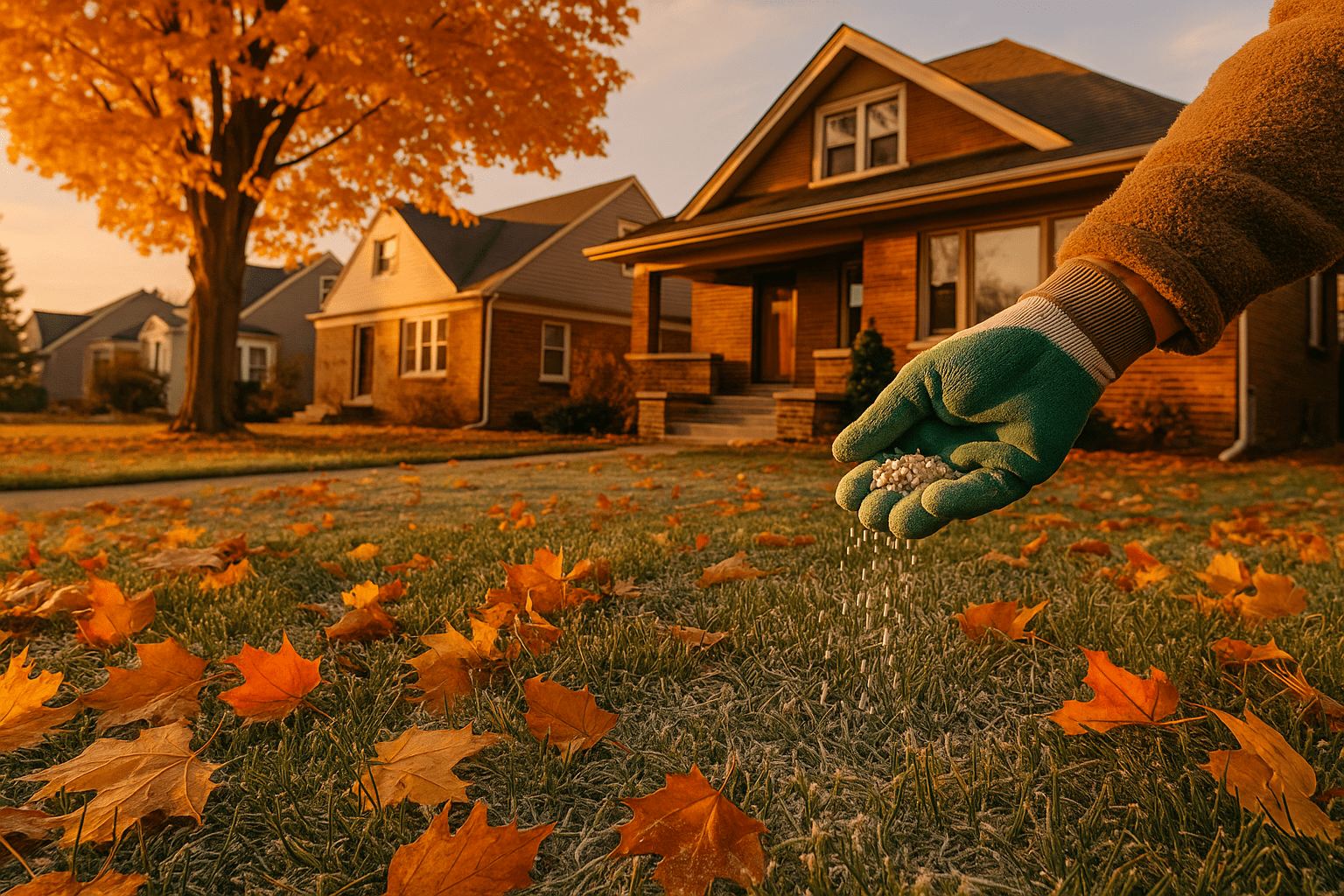
Why Winterizer Is the Step Chicago Lawns Miss (And Regret in Spring)
Every fall, someone tells us, “I’ll just skip the winterizer this year.” And every spring, we get the call: “Why does my lawn look dead?”
Winterizer treatments are the unsung heroes of Chicagoland lawns. They don’t get the glory of bright spring color or summer stripes, but they are one of the most reliable ways to come out of winter thicker, greener, and easier to manage.
What a winterizer actually does
A winterizer is not just “another fertilizer.” It is typically a potassium-forward application designed to support winter hardiness and spring recovery.
The goal is to help your lawn:
- store energy going into dormancy
- support root strength and stress tolerance
- improve resilience against freeze, wind, and long cold stretches
Think of it like “spring insurance” applied in fall. You do not see the payoff immediately, but you feel it when spring arrives.
What happens when you skip it
When lawns go into winter underfed or stressed, spring usually looks like this:
- slower green-up
- thinner turf and more visible bare areas
- weak blades that look brittle or matted
- more opportunity for weeds to move in once temps rise
Skipping winterizer does not always “kill” a lawn, but it often makes spring recovery harder and more expensive.
When to apply it in Chicagoland
The best window is late fall, usually between early November and the first hard frost.
This is when top growth is slowing, but the lawn is still active below the surface and can use nutrients to prep for dormancy.
The 1st Home Lawn approach
1st Home Lawn uses a winterizer step as the final part of the season because it sets up the next one.
Our winterizer is a slow-release, potassium-forward treatment designed for Midwest lawns to support winter resilience and a faster spring bounce-back. It is the last move that makes the first spring visit work better.
Chicagoland takeaway
Do not skip the step that does the most when you see the least. If you want the easiest spring you have had in years, winterizer is one of the smartest fall decisions you can make.