Stop Watering Your Lawn Like It Is a Garden, That Is Why It Is Struggling
When homeowners water lightly and frequently, moisture stays near the surface. That encourages shallow roots, which makes the lawn more fragile during heat, drought, and changing weather. It also creates the kind of environment where weeds can compete more easily.
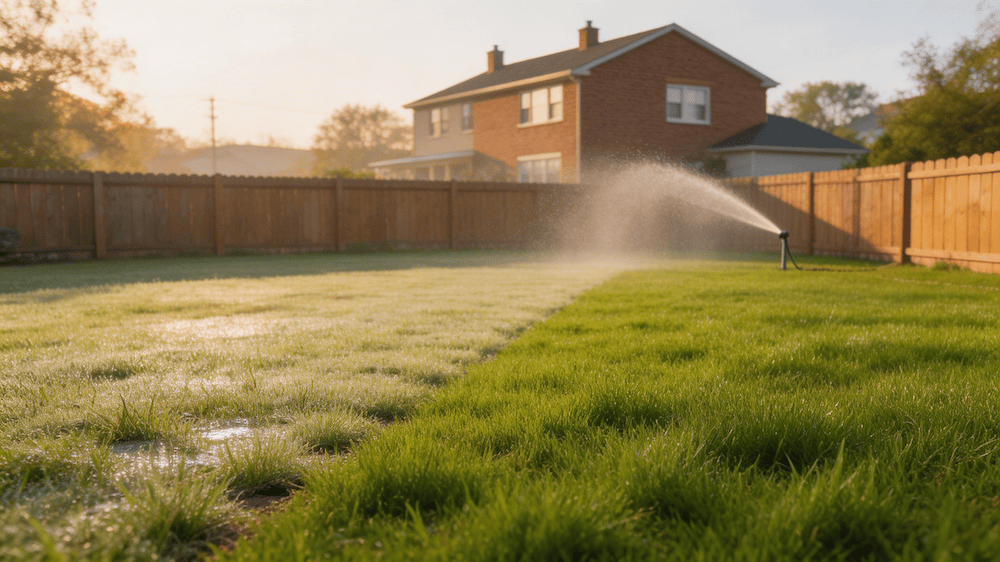
Watering feels like the safest move in lawn care.
If the grass looks stressed, water it.
If it looks brown, water it more.
If it still does not improve, keep watering.
That sounds logical, but it is also one of the most common reasons lawns become weak and dependent.
Lawns do not thrive from constant surface watering. They thrive when roots are trained to grow deeper.
When homeowners water lightly and frequently, moisture stays near the surface. That encourages shallow roots, which makes the lawn more fragile during heat, drought, and changing weather. It also creates the kind of environment where weeds can compete more easily.
So the lawn may look better for a moment, but it becomes less resilient over time.
A lawn that only looks good when it is constantly watered is not actually healthy. It is surviving off repeated short term relief.
A stronger lawn is built through deeper, more intentional watering that encourages roots to move downward where moisture lasts longer. This helps grass hold color longer, recover faster, and tolerate stress better.
Of course, watering is only one part of the equation. If mowing is off, if the lawn is nutritionally weak, or if compaction is preventing water from penetrating properly, watering alone will never solve the issue.
That is why some homeowners water more and more every season while still feeling disappointed.
They are treating the symptom, not building the system.