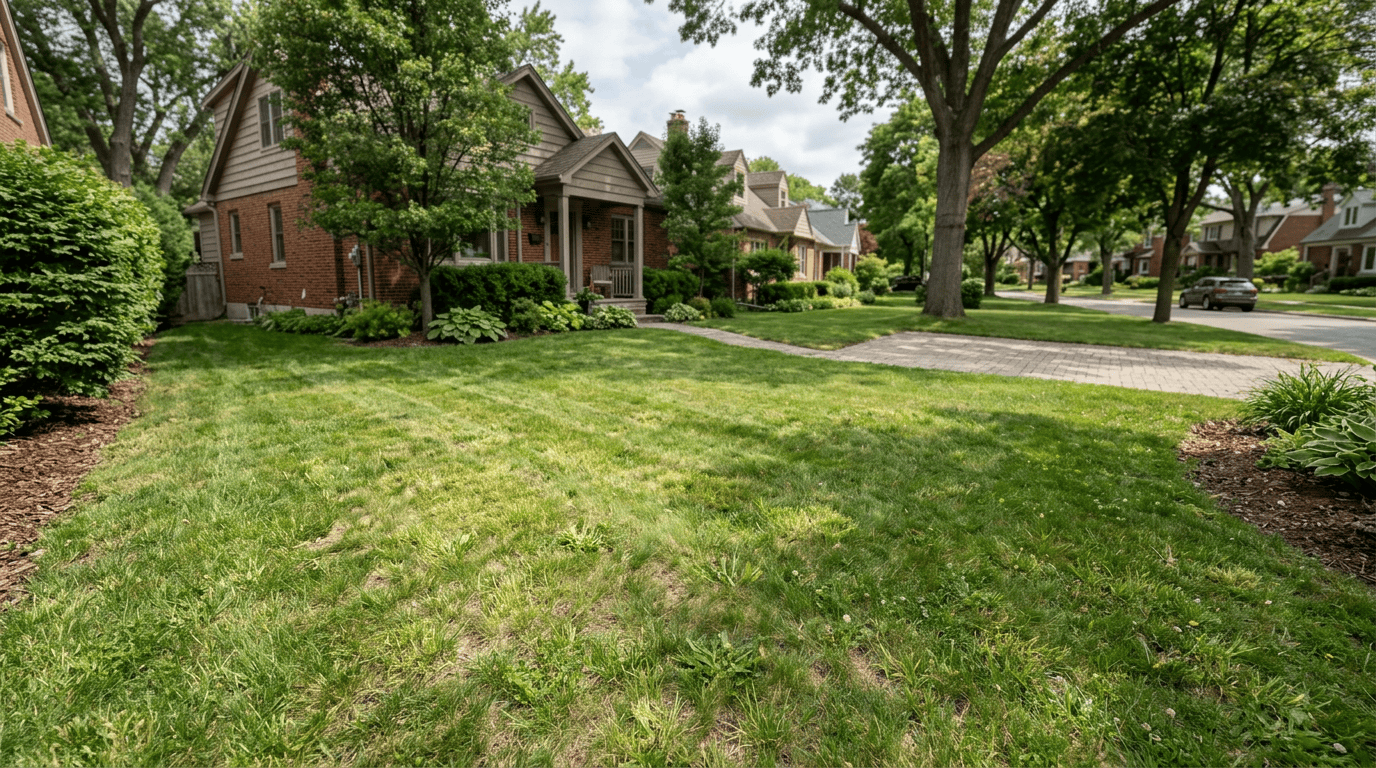
Lawns age just like homes, trees, and landscaping.
A lawn that looked fantastic ten years ago may not perform the same way today.
Over time, soil becomes more compacted. Nutrients are depleted. Organic matter changes. Grass plants naturally age and thin.
As this happens, homeowners often notice:
- More weeds
- Thinner grass
- Slower recovery
- Increased brown spots
- Uneven growth
Many people assume aging lawns simply need more fertilizer.
In reality, older lawns often require a broader strategy.
Aeration helps relieve years of compaction. Overseeding introduces new grass plants. Proper fertilization restores nutrient balance.
Regular maintenance becomes even more important as lawns mature.
The goal is not simply maintaining what exists. It is actively rejuvenating the lawn so it continues performing year after year.
With the right care, even older lawns can regain density, color, and overall health.