How to Fix Patchy Grass in Chicago Lawns (Step-by-Step Guide)
Patchy grass is one of the most common lawn issues in Chicagoland, and it almost never fixes itself without intervention.
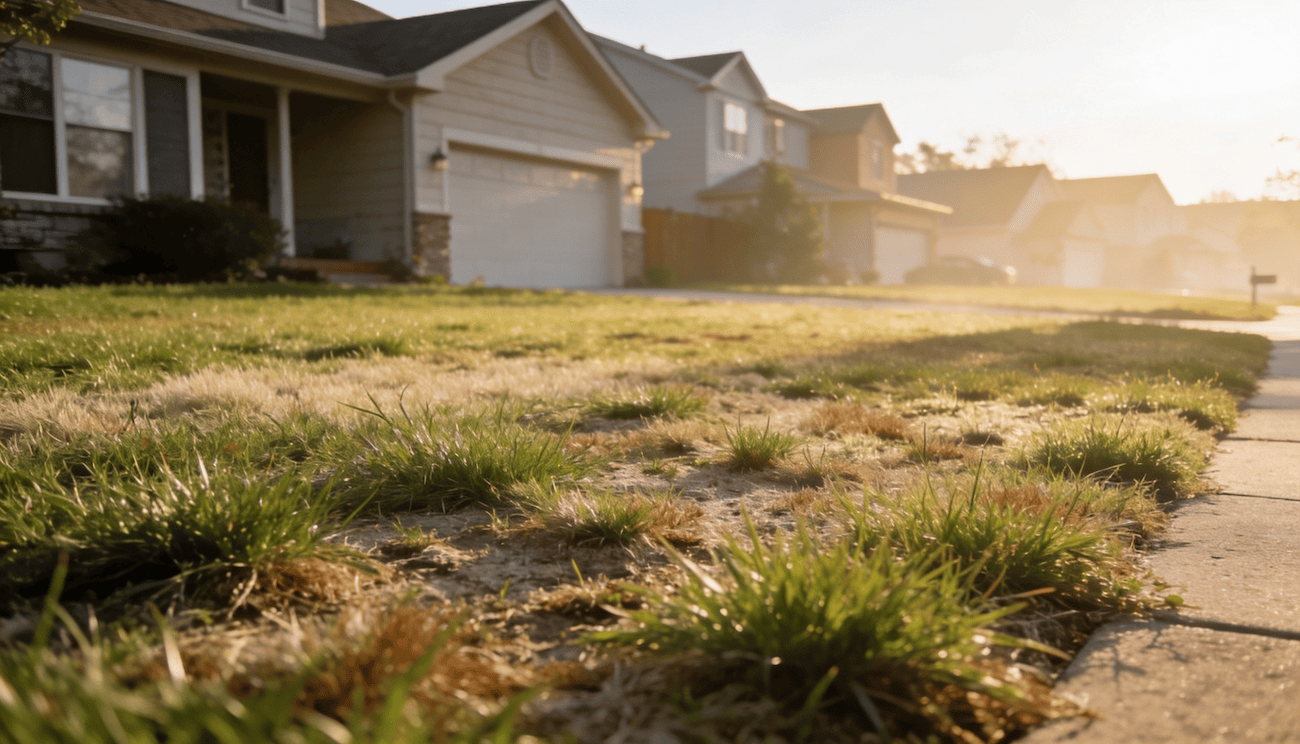
Patchy grass is one of the most common lawn issues in Chicagoland, and it almost never fixes itself without intervention.
Most patches develop because the lawn cannot support growth in certain areas. That usually comes down to a mix of compaction, poor soil conditions, inconsistent watering, or lack of density.
The mistake many homeowners make is jumping straight to reseeding. While adding seed can help, it rarely works long term if the underlying issue is not corrected first.
To properly fix patchy grass, the process needs to follow a sequence.
First, the soil needs to be addressed. If the ground is compacted, roots cannot expand and new seed cannot establish. Loosening the soil allows air, water, and nutrients to reach deeper.
Next, nutrient balance needs to be corrected. Grass will not fill in weak areas if it is not being properly fed at the right time.
Then reseeding can be introduced. When done with proper timing, especially in early fall or spring, seed has a much higher chance of taking hold.
Finally, consistency matters. Watering needs to be steady but not excessive, and mowing should support growth instead of stressing the lawn.
A healthy lawn does not just cover patches temporarily. It fills in naturally and holds its coverage.