How Often Should You Aerate Your Lawn in Illinois? The Complete Seasonal Breakdown
Aeration is the one service almost every homeowner knows they should do, but many are unsure when to schedule it. In Illinois, timing matters more than anything because cool-season grasses respond best during specific windows of the year.
When to Aerate Your Lawn in Chicagoland (And Why Timing Matters)
Aeration is the one service almost every homeowner knows they should do, but many are unsure when to schedule it. In Illinois, timing matters more than anything because cool-season grasses respond best during specific windows of the year.
Here is the simple answer: in Chicagoland, aeration should be done once a year in the fall, and optionally again in spring if your soil is heavily compacted.
Let’s break it down.
Why lawns here need regular aeration
A lot of Chicagoland lawns sit on heavier, clay-based soil. Over time, that soil compacts, and you start seeing the same frustrating pattern:
- Water sits on top of the lawn instead of soaking in
- Roots struggle to grow deeply
- Grass thins out from lack of oxygen
- Heavy foot traffic areas turn hard and worn
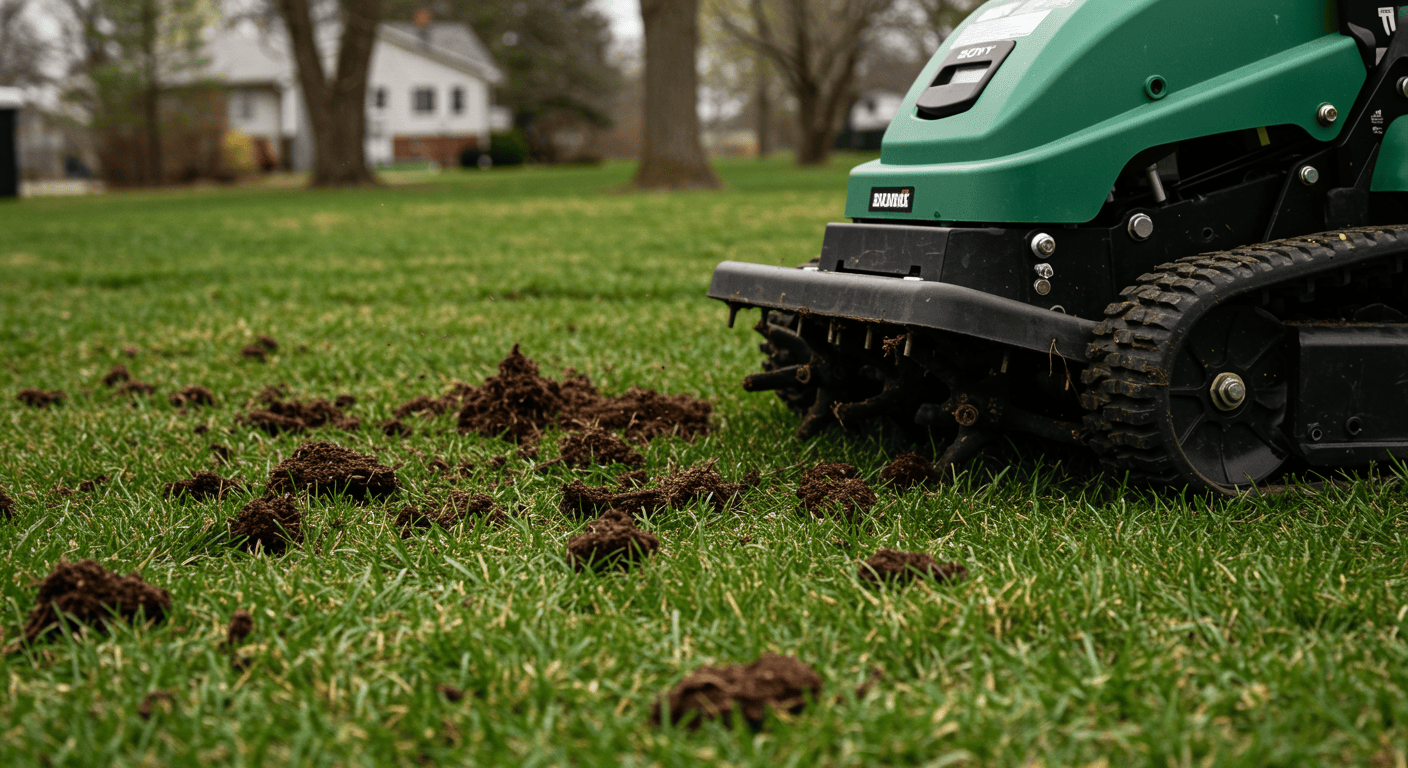
Core aeration pulls small plugs of soil from the lawn. That creates thousands of openings so air, water, and nutrients can reach the root zone again, which is what helps turf thicken.
The best time of year to aerate in Illinois
Fall (the ideal window)
Fall is the best time to aerate in Chicagoland because cool-season grasses do more root growth then. Aeration helps roots expand, and it sets the lawn up to come out of winter stronger.
Fall is also the best time to combine aeration with overseeding, which is how thin lawns become thick lawns in one season.
Spring (a secondary option)
Spring aeration can help if you have severe compaction, winter damage, or areas that stay hard no matter what you do. It is not as ideal as fall for renovation, but it can still improve water absorption and help the lawn recover.
If you plan to seed in spring, timing matters. You want aeration and seeding aligned so the seed makes contact with soil.
How to know your lawn needs aeration now
Here are the most common signs your lawn is compacted:
- Water runs off instead of soaking in
- The soil feels hard even after rain
- Thin patches or bare spots keep showing up
- Heavy foot traffic creates visible paths
- Your lawn never looks as green or thick as you expect
If any of these apply, your lawn is likely “suffocating,” and aeration can make a noticeable difference.
Pair aeration with overseeding for the best results
This is where the real transformation happens.
Aeration opens the soil, and seed drops into those openings, improving seed-to-soil contact. That leads to better germination, thicker growth, and a lawn that competes better with weeds.
Chicagoland takeaway
If you want the best results, schedule aeration in the fall and use spring only when compaction is severe. One well-timed aeration can make every other lawn investment work better.