How Long Does It Take for New Grass Seed to Grow?
Grass seed needs the right combination of moisture, temperature, soil contact, and time to germinate and develop.
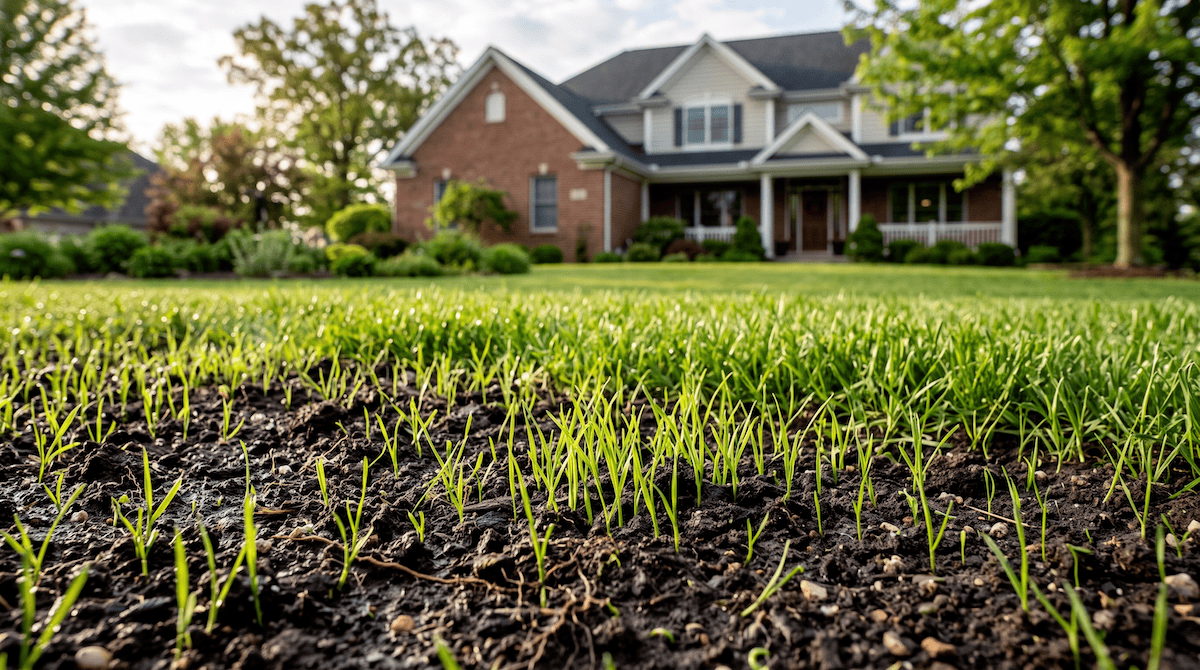
Planting grass seed can be exciting because homeowners naturally want to see results quickly.
But one of the biggest mistakes is expecting a newly seeded lawn to look established within a few days.
Grass seed needs the right combination of moisture, temperature, soil contact, and time to germinate and develop.
Germination Is Only the Beginning
Different grass species germinate at different rates.
Some seeds may begin showing growth relatively quickly under favorable conditions, while others take longer.
Even after the first blades appear, the grass is still developing.
Small seedlings are vulnerable to drying out, foot traffic, weeds, and environmental stress.
Moisture Is Critical
New grass seed needs consistent moisture during establishment.
That does not necessarily mean flooding the lawn.
The goal is to keep the seed and surrounding soil from drying out while avoiding excessive water that can wash seed away or create other problems.
Consistency matters.
Seed-to-Soil Contact Is Important
Grass seed needs contact with soil to establish properly.
Simply throwing seed over an existing lawn may produce inconsistent results if seed cannot reach a suitable growing environment.
This is one reason professional overseeding often involves preparation of the existing turf and soil.
Don't Mow Too Soon
Newly seeded areas need time to establish.
Mowing too early can disturb seedlings before they develop sufficiently.
At the same time, allowing established grass around the new seedlings to become excessively tall can create its own problems.
The correct timing depends on growth and the type of grass involved.
Why Some Seeded Areas Grow Faster Than Others
Even within the same yard, germination can vary.
Differences in sunlight, moisture, soil quality, and seed-to-soil contact can all affect results.
If one section is thriving while another remains bare, the issue may not be the seed itself.
Patience Pays Off
A newly seeded lawn is an investment in future turf density.
The goal isn't immediate visual perfection.
The goal is establishing enough healthy grass to create a stronger, thicker lawn over time.
Proper preparation and aftercare can make a significant difference in the final result.