Heavy Clay and Compacted Soil in Chicagoland: Why Your Lawn Won’t Thicken Until You Fix This
Thin grass often means soil issues. Learn how compaction and clay affect drainage, why weeds love wet spots, and what aeration changes in Chicagoland.
Chicagoland Soil Compaction: Why Your Lawn Won’t Thicken (Even With Fertilizer)
Many Chicagoland lawns sit on heavier soils. When that soil is compacted, it creates a frustrating pattern: water runs off during storms, puddles in low spots, and grass struggles to thicken even when you fertilize.
Why compaction matters in our climate
Compaction reduces pore space in soil, so roots get less oxygen and water cannot move correctly. The result is shallow roots, poor drought tolerance, and weed-friendly conditions in wet, compacted areas.
Illinois Extension notes that aeration and overseeding can improve water drainage and that many weeds grow in wet, compacted areas where grass will not grow well.
Symptoms that point to compaction, not “bad seed”
Compaction tends to show up in repeatable patterns, especially in high-traffic areas:
- Water pooling after rain
- Thin grass near walkways, play areas, or dog paths
- Moss or weedy patches where the soil stays damp
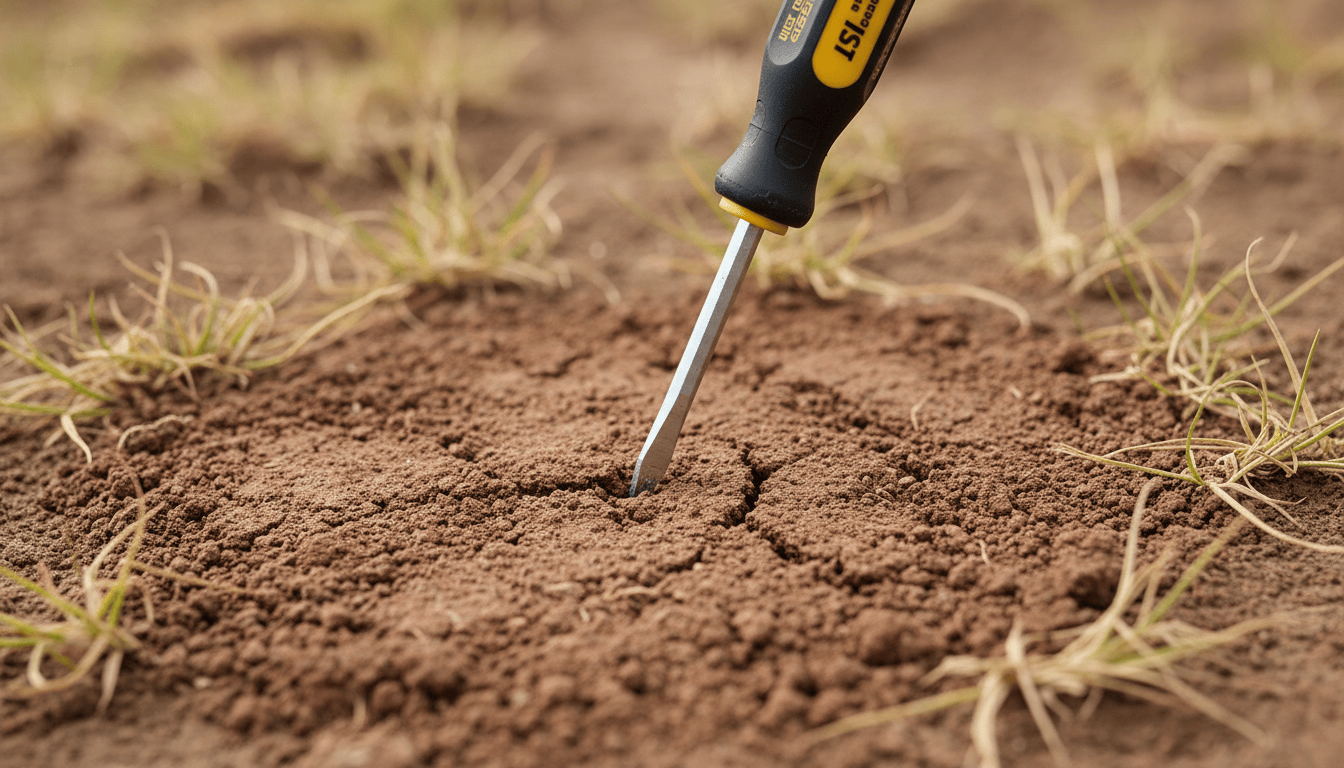
- Hard soil where even a screwdriver is difficult to push in
If those symptoms are consistent year after year, the issue is often the soil structure, not the seed.
Why fertilization does not solve compaction on its own
Fertilizer supports growth, but it does not open soil structure. In compacted clay, nutrients and water may not reach roots effectively, which is why some homeowners spend for years and never get density.
If the soil cannot breathe, the grass cannot build the root system needed to stay thick.
What core aeration actually changes
Core aeration is not “poking holes.” It is structural relief.
A hollow-tine aerator removes plugs of soil. Illinois Extension points out that core aeration relieves compaction, reduces thatch, and should be done when soil is slightly damp so tines can penetrate properly.
After aeration, overseeding becomes more effective because seed lands in openings and has better soil contact. It is a one-two punch: improve the medium, then add plant competition.
Chicagoland seasonal timing
Fall is the most reliable window for aeration and overseeding because cool-season grass establishes best in late summer to early fall.
That timing also gives new grass time to root before winter and show up stronger in spring.
What about topdressing and soil improvement?
If compaction is severe, a plan may include repeated aeration cycles and light topdressing with compatible material to gradually improve soil structure.
The key is avoiding quick fixes that create layering problems. This is where a pro plan saves time because practices need to match your soil type, traffic patterns, and drainage flow.
When compaction is really a grading issue
If water consistently moves toward the home or sits against foundations, it becomes a drainage issue beyond lawn health. In that case, landscape drainage solutions may be needed in addition to lawn care.
Chicagoland takeaway
In Chicagoland, lawns that look effortless usually have soil that can breathe. Fix that first, and every other lawn investment works better.