Chicagoland Fall Leaves: Mulch, Bag, or Rake, What Helps Your Lawn Most
Leaves can help or hurt your lawn. Learn when to mulch leaves into turf, when to remove them, and how to avoid smothering grass in fall.
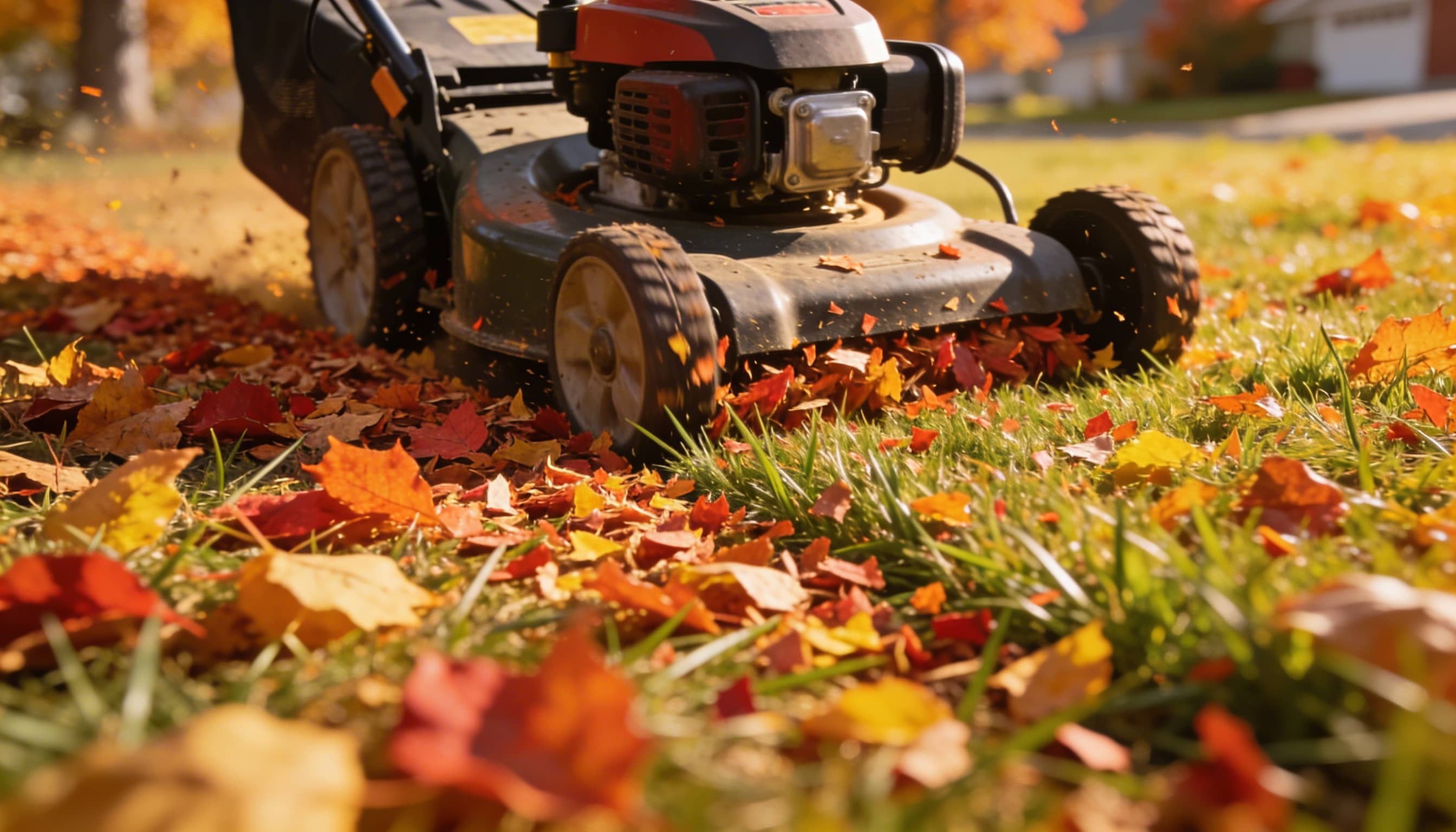
Chicagoland Leaf Cleanup: How to Use Fall Leaves to Help Your Lawn (Not Smother It)
In Chicagoland, fall leaves are not just a cleanup task. The way you handle leaves can either strengthen your lawn or smother it heading into winter.
When leaves help your lawn
Leaves are not automatically “waste.” When chopped properly, they can become free organic matter.
Illinois Extension notes you can run over leaves with a mower to shred them, and that shredded leaves break down faster and are less likely to blow away.
Illinois IPM also summarizes research showing that even relatively deep layers of certain leaves can be mulched into established turf without obvious adverse effects, as long as they are chopped effectively.
When leaves harm your lawn
The problem is thickness.
A heavy mat blocks light and traps moisture. Illinois Extension notes that fallen leaves are fine left to lie, but if the layer becomes too thick it can smother grass. Mowing can help reduce thickness by chopping leaves into smaller pieces.
If your lawn disappears under a carpet of leaves, your grass cannot breathe or photosynthesize. That is when problems start.
Why leaf management matters for winter health
Leaf mats increase moisture and reduce airflow, which can increase winter disease risk.
Illinois Extension winter damage guidance points to practices like sound fertilization, adequate drainage, and airflow improvements as ways to avoid severe winter issues like snow mold.
Leaf management supports those goals by keeping turf drier and less prone to disease.
A practical Chicagoland decision guide
Use this simple rule:
- Mulch leaves when you can chop them into small pieces that fall between grass blades
- Remove or bag leaves when they form a dense mat or when you are dealing with known disease issues that could be spread by leaf debris
You are not choosing between “mulch everything” and “bag everything.” You are choosing the right approach for the amount of leaf drop and the condition of your lawn.
How to make mulching work without buying new equipment
You can mulch effectively with what you already have if you follow a few habits:
- Use a mulching blade if available
- Mow more frequently during peak drop so you are never shredding a full carpet in one pass
- Mulch when leaves are relatively dry so they chop instead of clumping
Do not forget the gutters and drainage tie-in
While this is lawn-focused, leaf season is also when drainage systems clog. If downspouts and gutters overflow, you create wet lawn edges and foundation moisture risk. A full seasonal maintenance mindset connects these dots.
When to involve a lawn service
If your fall schedule is packed, leaf handling is one of the easiest tasks to outsource because it directly influences spring turf quality.
The win is not just “a clean yard.” The win is not starting spring with smothered grass and disease issues already in motion.
Chicagoland takeaway
In Chicagoland, spring lawns are built in fall. Leaf management is part of that build.